

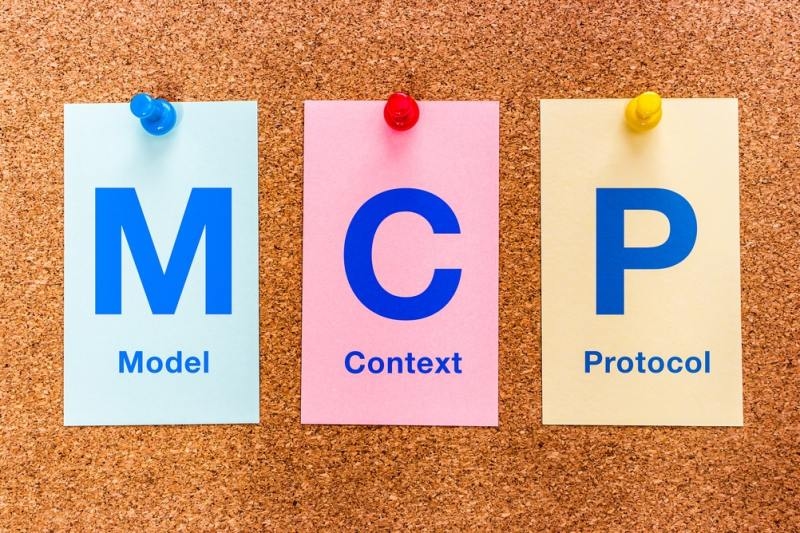
The AI landscape moves rapidly; a technology that seems vital one year can appear outdated the next. MCP has recently come under scrutiny, and people are wondering whether or not it has a place in modern AI. After working with Model Context Protocol, CLI tools, and agent-based workflows ourselves, the reality is somewhat less dramatic than what recent headlines seem to portray.
Model Context Protocol is not dying out but evolving to work alongside the latest approaches that are reshaping the way developers are building AI applications.
As AI models got more capable, they needed the ability to interact with files, databases, APIs, and even software tools. In order to do so, developers were stuck building unique integrations, which made systems impossible to maintain and scale.
To solve this, the Model Context Protocol was created. The key is that this standardizes the way an AI application is able to interface with such resources. It allows a developer to implement one standard way for AI applications to interact with the resources on the internet instead of building out and maintaining many different ways. This was extremely beneficial when large organizations were attempting to build complex AI applications, which often interfaced with many different tools and data sources.
Learn Further: Learn the Meaning and Benefits of Agile Digital Transformation
Model Context Protocol was appealing to larger development organizations because the concept greatly simplifies the number of different integration approaches needed. Instead of implementing one method of integrating with each of the resources the agent might be able to interact with, they were able to build a way to connect.
Benefits included:
These advantages made Model Context Protocol a very attractive option for organizations looking to build reliable AI systems that did not need to be re-architected every six months.
The conversation about Model Context Protocol has changed dramatically as AI models are improving so much that they can now perform at a much higher level. Today, models have higher reasoning capabilities and can follow longer prompts, which allows them to utilize tools and act without necessarily relying on a rigidly defined protocol.
Consequently, a number of people have begun to wonder if the Model Context Protocol is even necessary. This conversation, however, misses the mark. The question is not whether MCP is dead, but rather whether or not the solutions MCP is meant to address can now be better tackled by alternative means. In many contexts, this protocol does offer something that advanced prompting can't replace.
It’s one thing to talk about building an AI agent and another to actually build one in the real world. The moment you try to integrate the model with all the systems that you need for that agent to work, you will inevitably run into difficulties, because even the best protocol can't save an AI that doesn't know how to use it effectively, or worse, the agent can't even reliably access the systems that you are providing to it in the first place.
Ultimately, successful AI agents rely on many different things, including:
With these elements in place, you will be much closer to building a successful AI agent.
One of the most significant changes in the way AI is used is the rise of agent skills. Instead of expecting a general AI model to solve every problem you throw at it, agent skills allow developers to create reusable capabilities that solve a specific set of problems; the skill might allow for coding, data analysis, or workflow automation tasks.
Since these capabilities are focused on a particular problem, they can provide much more consistent output than a broad prompt. The other big advantage of agent skills is that they prevent the need for endless prompt re-engineering; you can simply create one skill that many people use, which makes them incredibly powerful.
With the increasing complexity of modern AI applications, agent skills are a valuable part of their architecture.
Organizations often find that agent skills lead to quick improvements. Users generally want their agent to complete the task given to them rather than worry about how it achieved it; in many cases, the outputs delivered by agent skills lead to very pleasing improvements.
Some benefits of agent skills include:
This does not mean that the original value of MCP disappears; both address very different needs, but it is important to note that often they can provide far stronger results when paired together.
Graphical interfaces and web applications are prevalent, but it’s important to note that CLI tools will continue to be an essential part of how AI is developed. Command-line applications give you direct access to your system's resources, allow for automation, and provide a powerful and flexible tool for the job.
A task that could take you 5 steps to complete using a GUI could take a single command line using a CLI. Even with our rapidly improving AI, this is one of the fastest and easiest ways to get specific things done.
The primary misconception of Model Context Protocol, agent skills, and CLI tools is that they are somehow competing with one another, rather than working alongside each other.
MCP is great at helping an AI agent find and access its external resources. Agent skills are excellent for enabling the AI agent to execute specific actions and workflows. CLI tools, on the other hand, help get those actions done efficiently by interacting with your system at the lowest level.
When layered on top of one another, these three elements can result in an incredibly powerful, versatile, and robust system that no single tool alone could achieve.
Read Next: How Hyperautomation Leads the Future of Business Automation
Hence, it’s clear that MCP is not dead. The value of the protocol is not in how complete a solution it offers, but in the problems it addresses. MCP provides a simple, efficient, and reliable way to connect an AI agent with external resources; however, in practice, that connection only goes so far.
When combined with agent skills and CLI tools, MCP truly begins to shine. Modern AI development is an ecosystem rather than an all-in-one solution, and by learning how these tools work together, we can build more capable agents than we have before.
The answer is no. MCP can be applicable not just to sophisticated AI but also to simple projects. Basically, any applications that need to access other agents, tools, files, or services in a structured manner can be improved by using a standard mechanism for integrating them.
Agent skill is a reusable competency designed to perform a certain job. By using an agent skill, consistency would increase, the need for complicated prompts would decrease, and an AI system could be applied to many more scenarios and applications.
No. Many CLI utilities only employ a few simple commands to operate. It is very easy to use; a beginner could start by operating these simple commands and will gain more and more interest in exploring automation by using it for complex operations.
An AI system would most likely be developed through a layer-based structure working together. These will include mechanisms such as protocols like MCP, agent skills, planners, and CLI utilities working together to create more capable and reliable AI systems.
This content was created by AI